
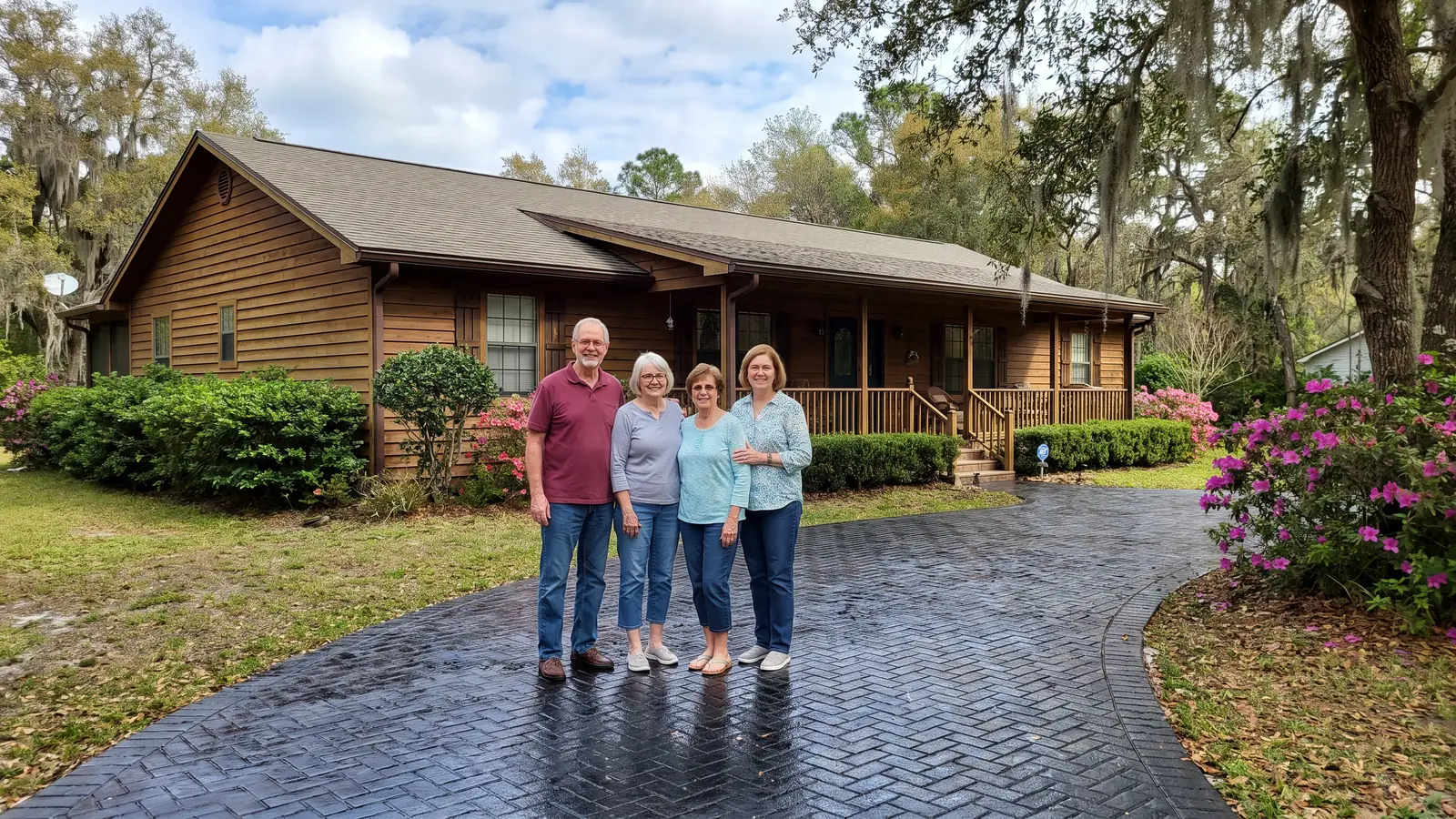
Paver sealing for Fruit Cove homes
Paver Sealing in Fruit Cove, FL
Fruit Cove driveways beside the Bartram Scenic Highway can be sealed, and (904) 299-8891 gets you a free estimate.
- Brings out deeper paver color
- Fresh joint sand helps lock pavers in place
- Gives weeds less room to grow
- Makes the surface easier to keep clean
- Free estimate, no obligation
Request a Free Estimate
Free, no obligation.
Fast, careful paver sealing in Fruit Cove
Paver sealing in Fruit Cove begins with a free look from a local contractor, and the estimate is free. Long driveways, pool decks, lanais and courtyards are all fair game, from Race Track Road to State Road 13. Use the link to ask for a free estimate, and a reply should come within 1 business day, often much sooner.
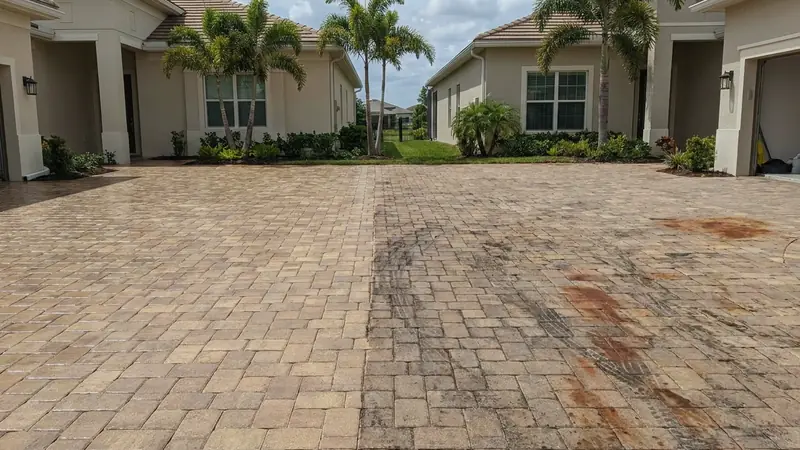
Say your driveway is long, and every foot of it is speckled with brown acorn stains. A cleaning, fresh joint sand and a new coat turn that long run back into one clean color. Want to talk first? Call (904) 299-8891 and describe what you see from the front door.
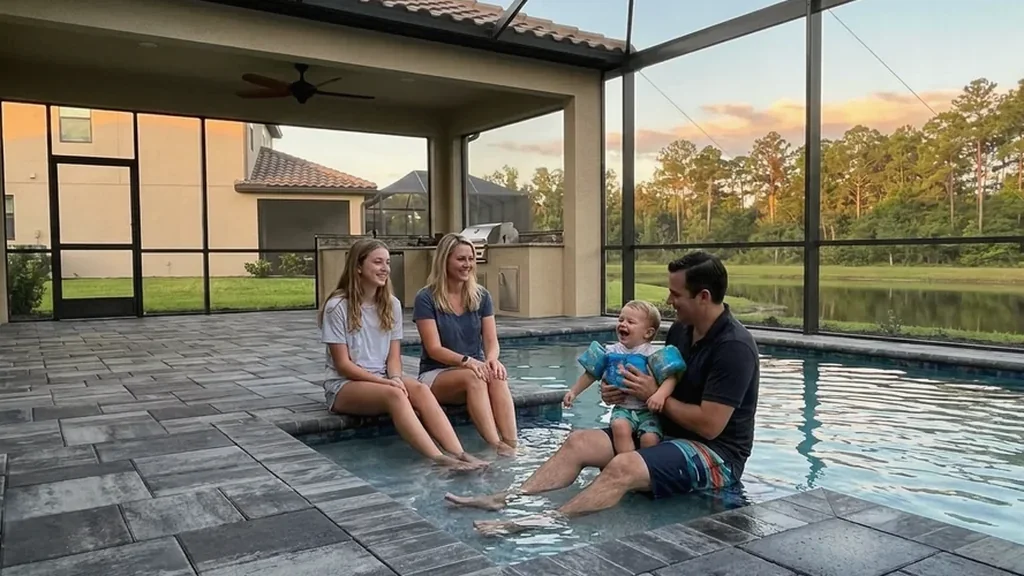
Why hire a local paver sealing contractor in Fruit Cove?
Fruit Cove properties run large, shaded and wet, which is why owners here like a contractor who has seen all three before. To talk it through for your lot, ask for a free estimate.
A free walk of your lot
A contractor tours every paved surface on your Fruit Cove property and quotes it at no charge.
Fair math on big jobs
Published prices run $1.75 to $3.25 per square foot, and larger jobs often cost less per foot. Compare your quote to that.
Made for oak country
Live, laurel and water oaks shade many Fruit Cove yards, so stains, leaf litter and slow drying are part of the plan.
No pressure to decide
You pick the date and the finish. A Fruit Cove estimate does not commit you to anything.
Get Your Free Estimate in Fruit Cove
Tell us about your pavers in Fruit Cove.
Free, no obligation
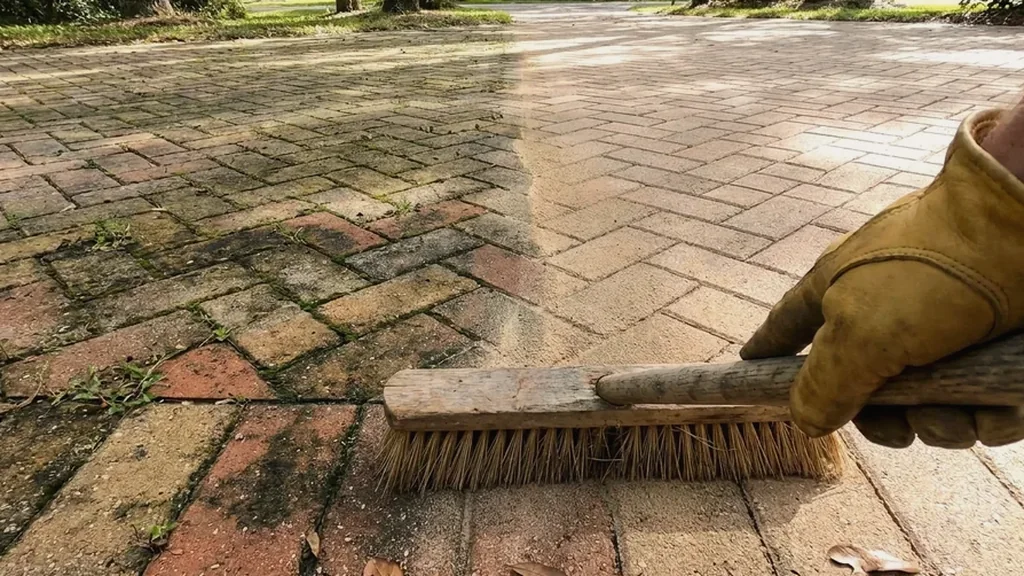
What paver problems show up most in Fruit Cove?
Brown stains from three kinds of oak
Walk under the canopy at Beluthahatchee Park and you pass live oak, laurel oak and water oak. UF/IFAS says water oak acorns stain asphalt and concrete where they land, and laurel oak leaves cling until early spring. On a Fruit Cove drive that means stains nearly all year. Those marks come out before the new coat goes on, never after it. A driveway near the trunk of a big oak takes the heaviest drop, and the stain pattern shows exactly where the branches reach. The contractor can tell tannin from plain dirt on sight, so ask to be shown. Fruit Cove sits about 20 feet above sea level, so even a gentle slope sends rain and leaf litter down a drive in a hurry.
A water table that rides high
The USDA calls the St. Johns soil series poorly drained, with water within 15 inches of the surface for 20 to 50 percent of the year. That is a regional soil fact and not a map of your lot. Still, Mill Creek and the 18-acre lake behind it show how much water moves through this area. Pavers over wet ground sink at the edges, and a coat applied over a dip keeps the dip. After a summer storm, walk the drive and note where water stands. Those spots show where the base has probably moved and where drying will crawl. The county's wet season runs from May through October, with intense but brief downpours, so summer ground rarely gets time to dry out fully.
Driveways laid with the house in the 1990s
According to NeighborhoodScout, 83.6 percent of Fruit Cove homes went up between 1970 and 1999, and Fruit Cove Estates dates to 1991. A drive laid back then has taken many summers of rain and tires. Joint sand has probably thinned, and a past owner may have added a coat that nobody remembers. Both facts change how the contractor starts. A faded, patchy finish is one clue that an old coat is still there. A small test spot shows how the surface reacts before the full job begins. Most of these are medium to large single-family houses, so the paved area is often big, and a worn coat shows from the street.
Algae along a canopy road
State Road 13 runs under canopy oaks, and plenty of side streets do the same. Green algae grows where shade and moisture meet, such as under trees and patio roofs. A lanai floor or a walkway on the shady side of the house can turn green in a few wet weeks. Cleaning clears it, but only if the surface is left to dry before any coating. A lanai under a roof may stay damp even on a sunny day. The contractor feels the surface before deciding that it is ready. A shaded walkway can stay slick with algae into the dry months, which is worth a note if guests come and go.
Orange lines from irrigation
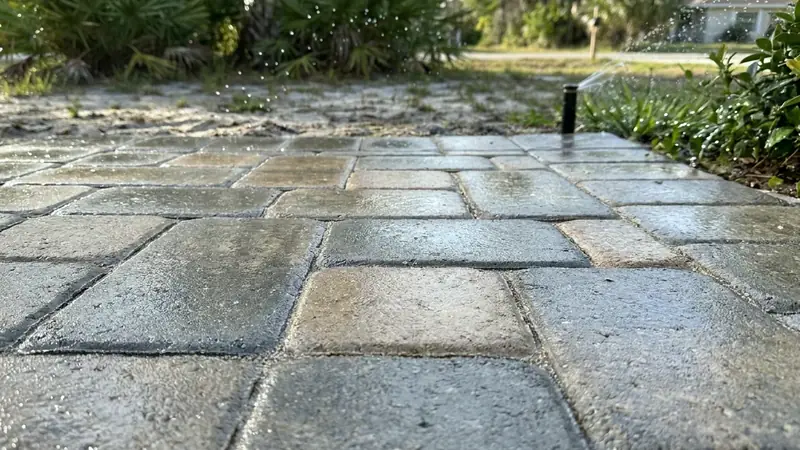
University of Florida extension says iron is common in Florida well water and can stain surfaces orange. A big lot often means a big irrigation system, and every spray head that reaches a paver can leave a line. The contractor treats those marks during the cleaning. After that, a small turn of the head keeps new ones away. On a large lot, ask the contractor to note which zones the sprinklers reach. One adjustment can spare you a repeat visit. Long runs of pavers between the house, the pool and the garage can carry those lines along the whole route.
Does paver sealing differ in Julington Creek Plantation, Durbin Crossing and Fruit Cove Estates?
Somewhat, because these neighborhoods date from different decades. The Fruit Cove Estates community dates to 1991, and its homes range from 1990 to 2004. Building at Durbin Crossing ran from the mid-2000s into the 2010s. Name your neighborhood when you ask for a free estimate, so the contractor knows the era of the house.
Julington Creek Plantation covers about 4,100 acres with roughly 45 neighborhoods built from the 1990s. Listings elsewhere in Fruit Cove name Lakes at Mill Creek, Mill Creek Landing and rural lots off State Road 13 and Fruit Cove Road. A rural lot may come with a long approach to the pavers. Call (904) 299-8891 and describe the kind of lot you have.
Many of these neighborhoods have homeowners associations, and each one writes its own guidelines. Florida Statute 720.3035 lets an association review changes to appearance where its rules say so, so ask about sealer color and sheen first. A lot outside a named subdivision answers only to you. Either way, ask for a free estimate when you are ready.
What does paver sealing cost in Fruit Cove?
A Fruit Cove lot is roomy, so a driveway, a pool deck and a lanai can add up to a lot of square feet. The range you will see published is $1.75 to $3.25 per square foot, covering the cleaning, new sand and the coat. Larger jobs often cost less per foot, since prep does not grow with the area. To price your own, ask for a free estimate.
Oak stains, a failed earlier coat, steps and a long approach from the road push a quote up. On a big lot, steps and gated entries add prep, a Jacksonville cost guide says. Ask the contractor to write the total area into the quote. Call (904) 299-8891 if you want help reading one.
| Paved area | Typical example | Clean, sand and seal |
|---|---|---|
| 300 sq ft | Small patio or walkway | $525 to $975 |
| 600 sq ft | Two car driveway | $1,050 to $1,950 |
| 1,000 sq ft | Large driveway or pool deck | $1,750 to $3,250 |
| 1,500 sq ft | Driveway plus pool deck | $2,625 to $4,875 |
Math based on the $1.75 to $3.25 per square foot that Northeast Florida paver companies publish. Your contractor sets the actual price after seeing the surface. Repairs, leveling and stripping failed sealer are usually extra.
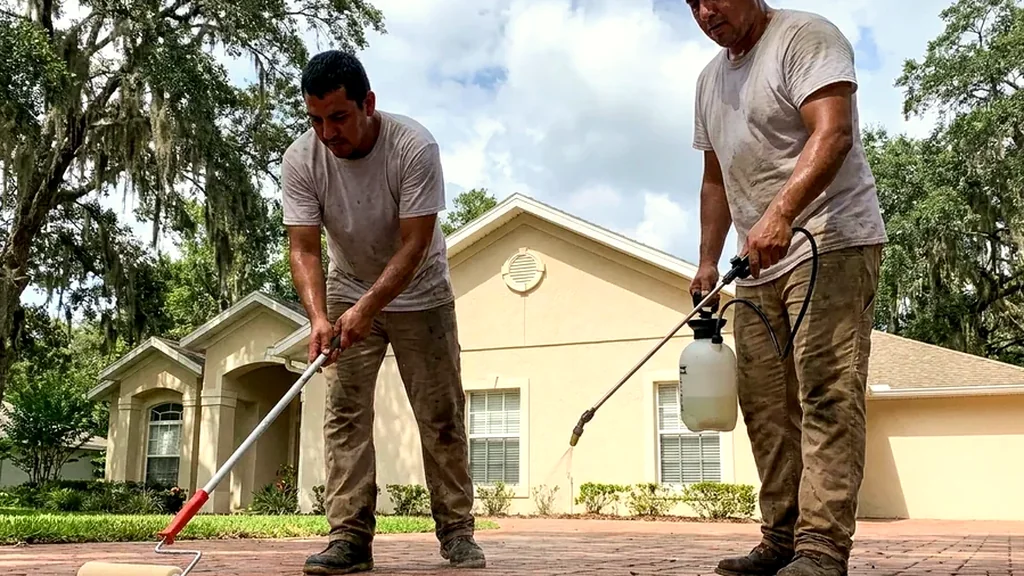
How does a paver sealing job work in Fruit Cove?
Walk the grounds with the owner
The contractor tours the driveway, walkways, pool deck and lanai with you. Low spots and lifted edges get marked first, since a coat applied over a dip keeps the dip. If a past owner sealed the pavers, the product decides what can follow, because a water-based product cannot be applied over a solvent-based one. Big lots take longer to cover, so allow some time. This walk is also when you mention pets, gates and any plants you want protected. Those details decide the order of work. Photos of any problem spot, such as a sunken corner by the garage, help the contractor plan.
Clear the oak litter and scrub
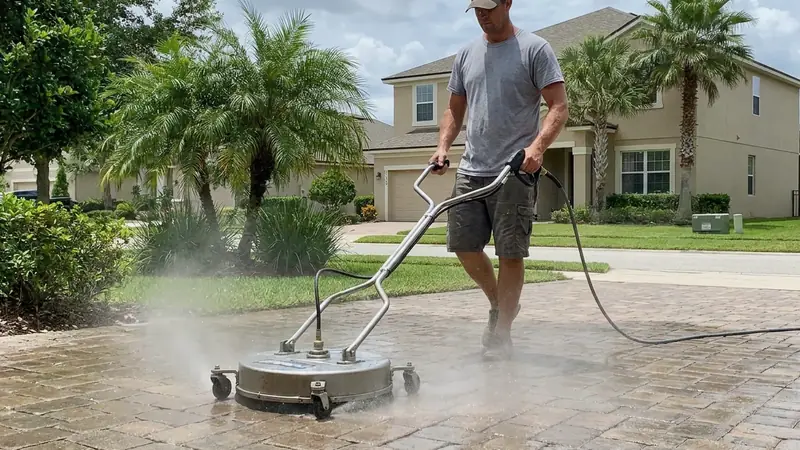
Leaves and acorns come off first, then the scrubbing starts on algae, tannin and tire marks. Orange irrigation lines are treated here too. Plants, siding and the pool are covered or kept out of the spray. Under heavy oak cover, this stage is the longest of the day. Rinse water from the pool deck is steered away from the pool. The contractor works in sections, so nothing dries dirty before it is coated. On a sloped drive, the contractor starts at the top and works downhill.
Refill the gaps between pavers
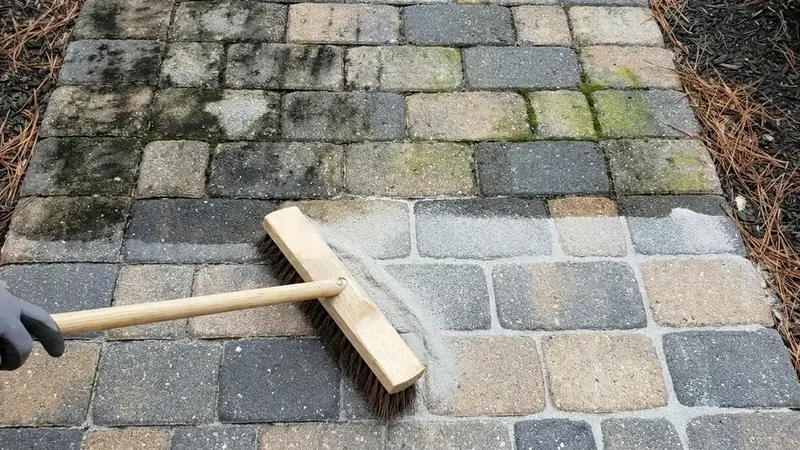
Scrubbing pulls joint sand out with the dirt, so new sand is packed in before any coating. In wet, sandy ground, open joints let soil creep in and give weeds a start. Corners and edges get a second look, since sand vanishes there first. A well-filled joint holds the pavers together and leaves weeds little room. If the joints ran thin for years, this stage takes more sand and more time. Ask what sand is used, so the joints stay full through the rainy months.
Give the surface time to dry
No coat goes on damp pavers. Summer storms in this part of St. Johns County come in short, heavy bursts, and a shaded drive stays wet longer than an open one. A hand check, not the clock, tells the contractor the surface is ready. A damp corner under an oak may wait for another day. Waiting costs far less than coating over trapped moisture. A careful contractor will say so up front. A big lot may be split over two days, so drying is never rushed.
Coat the pavers and let them cure
The contractor sprays the sealer and back-rolls it into the joints, in the finish you chose. A Jacksonville company reports that people can walk on it within hours, while cars wait about a day. Expect to recoat in two to five years, as companies commonly quote. The name of the sealer used belongs on your invoice, since the next contractor will want to match it. A future owner will also know what is on the surface. Keep that note with the house papers. Plan cars, guests and deliveries around the cure time, and tell the contractor about any event on the calendar.
Complete paver services in Fruit Cove
Fruit Cove work follows one order: clean, refill, dry, coat. The cleaning clears oak stains and algae, and new sand fills the joints. The coat goes on last, so nothing dirty hides under it. To ask how long each stage runs on your lot, call (904) 299-8891.
Big properties carry several kinds of pavers, and each wears in its own way. A long drive takes tires and shade, a pool deck takes sun and splash, and a lanai floor sits under a roof where it stays damp. Mention each one when you ask for a free estimate, and the contractor can price the whole property in a single visit.
Pick water-based or solvent-based sealer first, then matte or wet look. An earlier solvent-based coat rules out a water-based one, so the old coat decides. Matte looks quieter under oaks, and wet look shows scuffs sooner. For help with the choice, call (904) 299-8891.
Fruit Cove gets its heavy rain mostly from May through October. Winter is the driest stretch, which gives the contractor the easiest dry days. Damp, shaded corners go last on the schedule. For a date that fits your lot, ask for a free estimate.
Questions to ask before you hire
- Will the pressure washing wear down the surface of my pavers?
- Will the sealer change how hot the pavers get in the summer sun?
- Can you clear the white, chalky haze that shows up on some of my pavers?
- How often will these pavers need a fresh coat of sealer?
- Do I need to turn off my sprinklers, and for how long?
- My pavers were laid recently. How long should I wait before sealing them?
- If part of my patio was sealed years ago, can the new coat match its sheen?
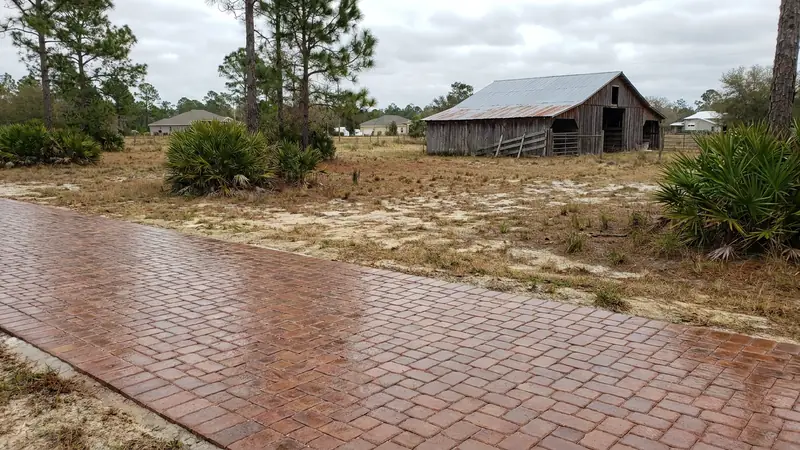
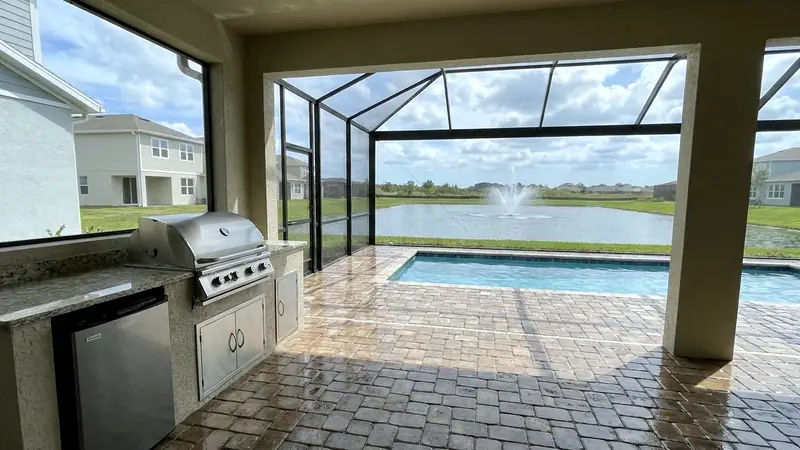
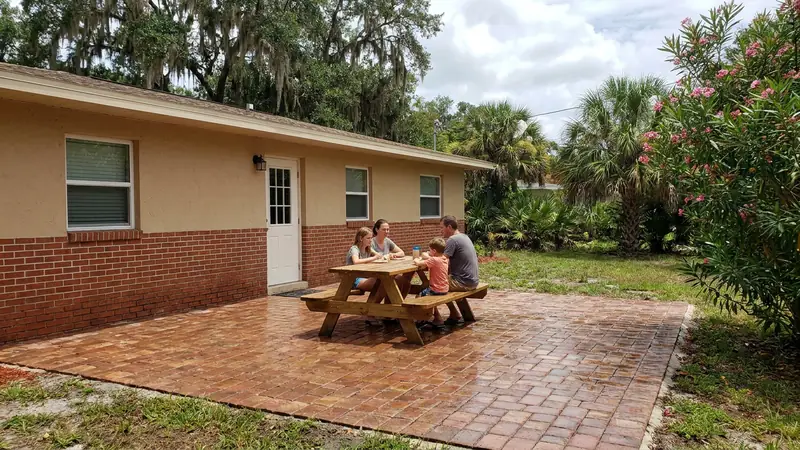
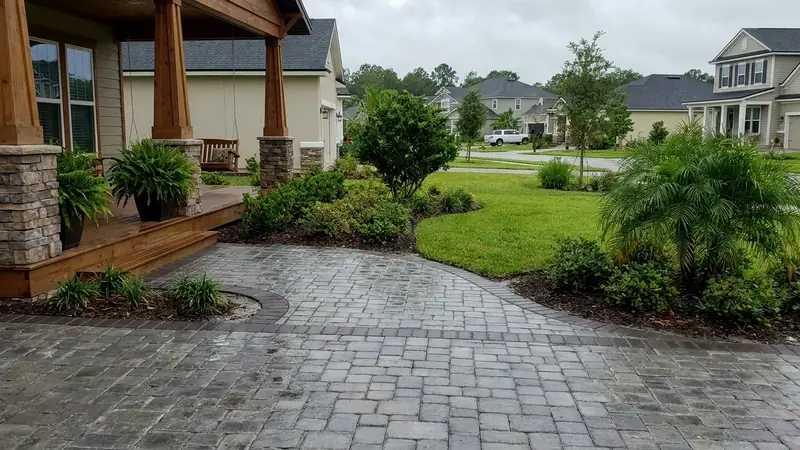
What do sealed pavers look like around Fruit Cove?
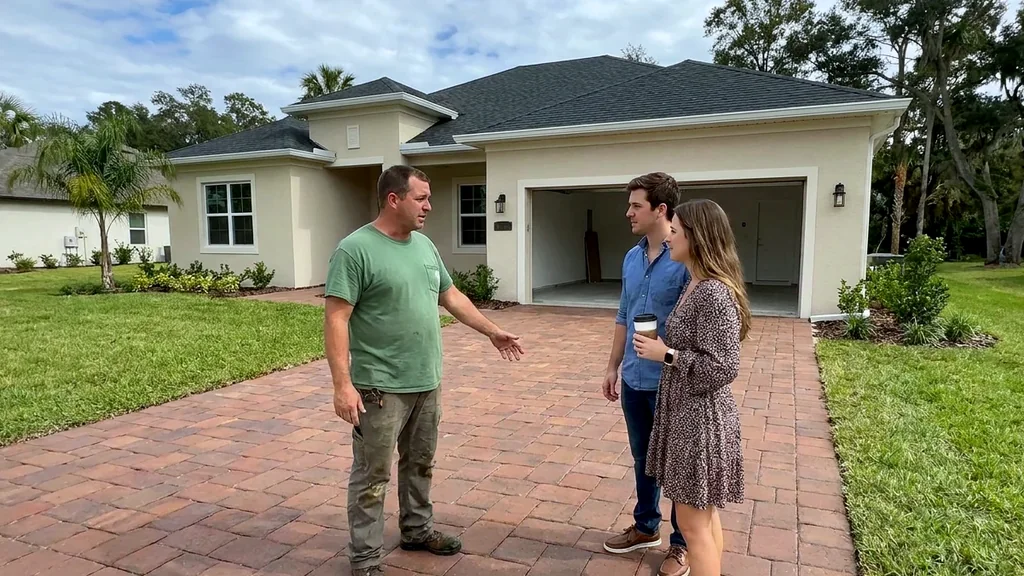
Why local matters in Fruit Cove
A contractor who works Fruit Cove knows the oaks. Beluthahatchee Park shows the mix of live, laurel and water oak that shades many yards. That tells the contractor to plan for stains and slow drying. For a contractor who covers Fruit Cove, call (904) 299-8891.
The road matters too. State Road 13 runs about 17 miles along the river, and many homes sit off it on long approaches. Where to park equipment and where to send runoff matter on a big lot. You can ask for a free estimate and ask how a visit would work for your drive.
Growth is another reason to hire a contractor who works nearby. Fruit Cove had 16,077 people in 2000 and 32,143 in 2020, so many homes date to the 1990s and 2000s. A contractor here sees those aging pavers often. If yours are in that group, ask for a free estimate and say when the house went up.
What is Fruit Cove's history, and where is it on the map?
Fruit Cove was named for the orange groves that covered the area. Theophilus Wilson Moore set up an orange plantation in 1873, planting along the river and Cunningham Creek, and settlers built a church there in 1870. It sits about 24 miles south of downtown Jacksonville and about 25 miles northwest of St. Augustine. If you want to confirm your address is in the area, ask for a free estimate.
The Bartram Scenic and Historic Highway, State Road 13, runs about 17 miles from the Julington Creek Bridge to Ward's Creek. Alpine Groves Park has 54.5 acres on a former orange plantation, and Beluthahatchee Park sits beside an 18-acre lake made in 1945. Near any of these, call (904) 299-8891 and say where you live.
Frequently Asked Questions
How much does it cost to have pavers cleaned and sealed in Fruit Cove?
The range you will see published is $1.75 to $3.25 per square foot to clean, sand and seal. Larger Fruit Cove properties often cost less per foot, since prep does not grow with the area. Oak stains and a failed old coat can raise the figure. Your quote should name the total area, so you can check the math yourself.
Why is paver sealing so expensive?
The bulk of the price pays for prep and labor, with the sealer itself costing less. Crews clean, refill the joints, wait for a dry surface and only then coat. A failed old coat adds stripping on top, and sealing protects the pavers, which can save replacement costs later.
Is it good to seal pavers in Florida?
For most driveways, yes. A coat keeps joint sand from washing away and makes the surface easier to clean in a wet climate. Under Fruit Cove oaks, it also helps new acorn and leaf marks come off. Wet look shows scuffs faster than matte, so match the finish to how your driveway is used. Pavers on long drives are also costly to replace, which is one more reason to protect them.
Do I need to ask a Fruit Cove contractor about a license to pressure wash?
Yes, ask any contractor which licenses and insurance apply, and ask for proof. Rules can differ by trade and county, so confirm with the contractor and the agency that issues the license. A clear answer is a good sign, and a vague one is a reason to keep asking.
How long do paver sealers last in Fruit Cove?
Coats generally last two to five years, according to company quotes. Oak shade, sprinklers and daily tires move a Fruit Cove driveway toward the short end. A Jacksonville company suggests a test: if water beads, the coat is still doing its job.
How long until I can drive on my sealed pavers?
Walking is usually fine within a few hours, and cars should stay off for a day, per one Jacksonville company. The sealer and the weather change the timing. Ask your contractor for the plan at your Fruit Cove home.
Will sealing fix sunken pavers on my Fruit Cove driveway?
No. Pavers that have sunk or lifted must be repaired before sealing. Sealing over a dip keeps the dip, one Jacksonville company points out. On wet ground, show the low spots at the first visit.
Can new sealer go over the coat from a previous owner?
Sometimes. The contractor identifies the old coat first, since the two sealer types do not mix. Many Fruit Cove homes date to the 1990s and 2000s, and earlier owners may have sealed the pavers. An old receipt or product name helps.
Why does my Fruit Cove driveway stay damp after the rest of the yard dries?
Shade and slow-draining ground are the usual causes. Canopy oaks block the sun, and the soil in this region can hold water close to the surface for much of the year. A contractor can check for low spots, and a damp driveway simply waits longer before it is coated.
Will sealing remove acorn stains and green film under my oaks?
No, cleaning removes them before the coat goes on, because sealer over them would lock them in. After the coat cures, new marks are easier to rinse away. A Fruit Cove driveway under oaks still needs an occasional rinse.
Ready for a Free Estimate in Fruit Cove?
Call (904) 299-8891 and tell us about your pavers.
Free, no obligation