
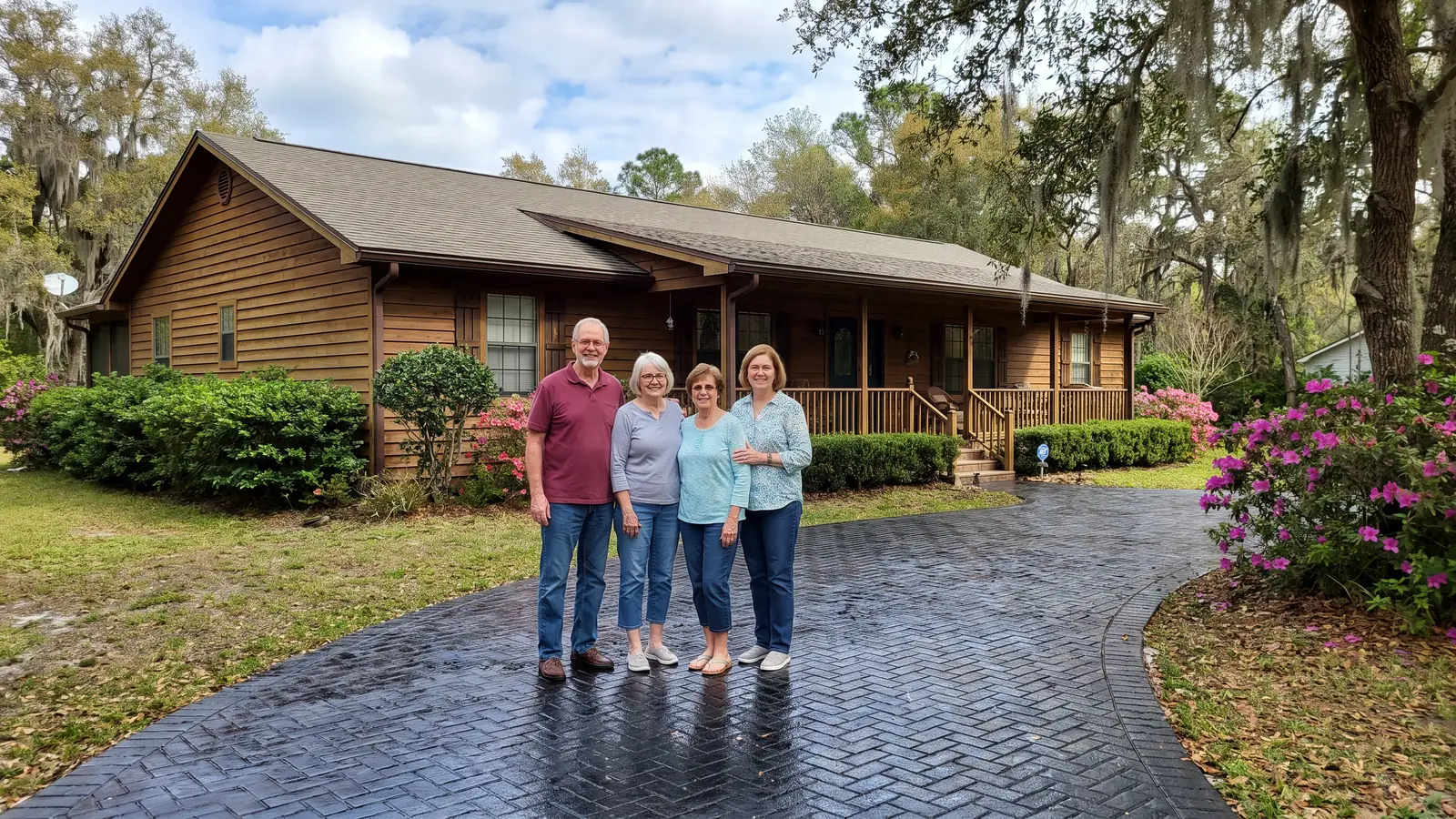
Paver sealing for Highlands homes
Paver Sealing in Highlands, FL
Highlands homes near Ray Greene Park can get paver sealing with a free estimate, so call (904) 299-8891 and ask.
- Brings out deeper paver color
- Fresh joint sand helps lock pavers in place
- Gives weeds less room to grow
- Makes the surface easier to keep clean
- Free estimate, no obligation
Request a Free Estimate
Free, no obligation.
Fast, careful paver sealing in Highlands
Paver sealing in Highlands is one call or quote request away, and the estimate is free. A local contractor cleans, re-sands and seals driveways, walkways and patios on homes from Dunn Avenue to the Trout River. Once you ask for a free estimate, a reply comes within 1 business day, and often much sooner.
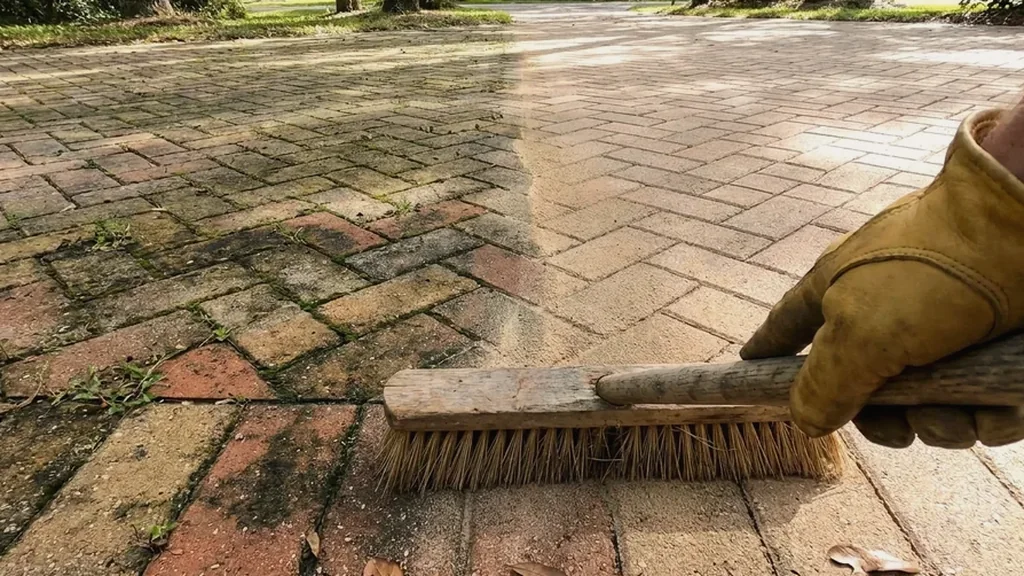
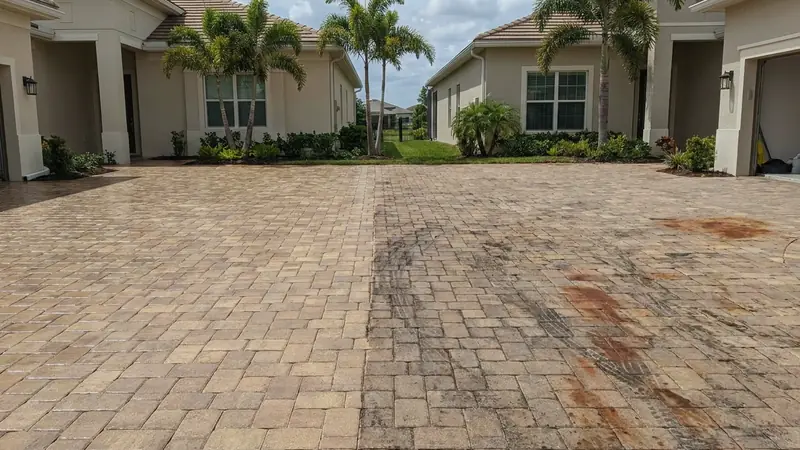
Picture a paver driveway with gray streaks and grass lines running through the joints. After a wash, fresh sand and a new coat, that same driveway goes back to one even color. If you want to talk it over first, call (904) 299-8891 and describe your driveway, walkway or patio.
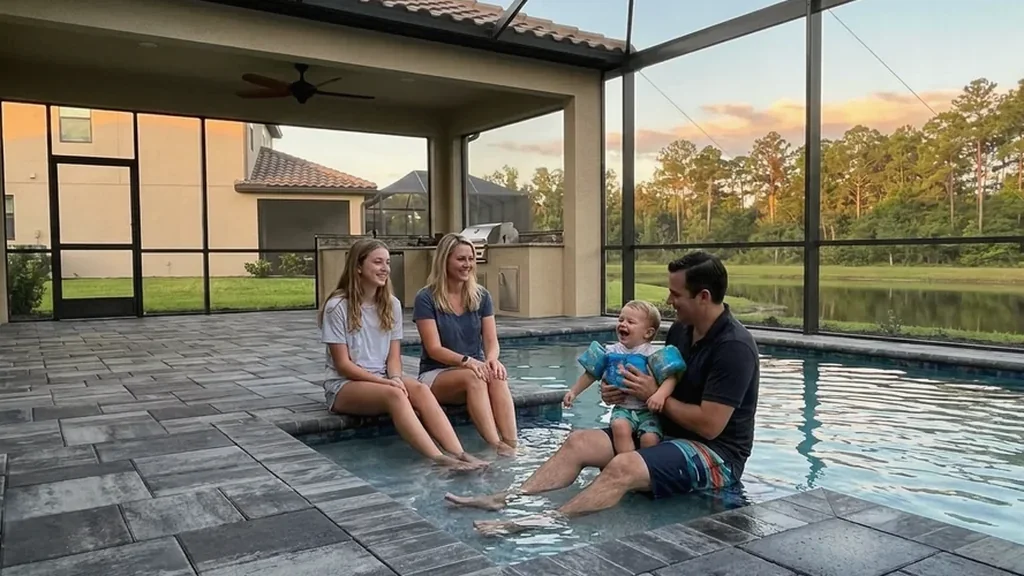
Why hire a local paver sealing contractor in Highlands?
Highlands homeowners tend to hire a local paver contractor because the houses are older and the sandy ground can stay damp near the Trout River. To hear how that fits your street, ask for a free estimate.
Free look at your driveway
The contractor checks your Highlands pavers at no charge. You hear a price before anything is agreed.
A published price range
Published prices in this region run $1.75 to $3.25 per square foot for the wash, new sand and the coat. Hold any Highlands quote up to that.
Older homes, older coats
A Highlands house from the 1950s may carry pavers sealed by an earlier owner. The contractor works out what is on them first.
You pick the finish
Matte or wet look is your call. Wet look shows scuffs sooner, which matters on a driveway that sees tires every day.
Get Your Free Estimate in Highlands
Tell us about your pavers in Highlands.
Free, no obligation
What paver problems show up most in Highlands?
Pavers added long after the house
A guide to one Highlands area counts 71 homes built from 1953 to 1970, and East Highlands lists homes from 1946 on. A paver driveway on a house that age was likely added by a later owner. That owner may have used a sealer nobody wrote down, and the pavers may have been laid in several stages over the years. Water-based sealer cannot go over solvent-based sealer, so the old coat has to be identified before the new one is chosen. Homes of about 1,448 square feet are typical in that guide, so lots are often modest. On a small lot, every paved surface sits close to the house, which makes careful rinsing and planning matter more.
Joint sand that drains away
The ground across Duval County is fine sand that drains fast, and the USDA describes the Ortega series that way. Annual rainfall in the area runs near 52 inches, and hard summer cloudbursts deliver much of it. Sand in the joints washes out, the joints widen and soil settles in. Weeds then start in the gaps, which is why pulling them never lasts. Refilling the joints with the right sand fixes the cause and not only the weeds. Because the soil drains fast, pavers here usually dry soon after a storm. That helps on sealing day, but sand can also move below the surface, so the contractor checks for gaps along the edges.
Green film on the shaded side
Green algae grows where moisture lingers, such as the north side of buildings and under trees or patio roofs. On a Highlands lot, that means the walkway beside the house goes green well before the sunny driveway does. Sealer would hold that film in place. The wash has to remove it first, and it has to dry before anything goes on. A neighbor's tree or a tall fence can keep that side damp for days. If the green comes back within a season, that spot likely gets little sun and may need more frequent care.
Damp ground near the Trout River
The Trout River runs 20 miles through the Northside, and its lower end is brackish. Trout River Boulevard follows the river's floodplain for about 3.9 miles. The USDA says the Mandarin soil series in this county has a seasonal high water table 18 to 42 inches down. Pavers on wetter ground can settle, and sealing preserves a dip it goes over, so low spots are fixed first. Show the contractor any corner where water sits after a storm. Low ground behind a house, or beside a drainage ditch, is worth pointing out at the first visit. The contractor can then plan extra drying time. Its main tributaries are the Ribault River, the Little Trout River and Moncrief Creek, so water moves through this part of the Northside from several directions.
Rust marks from sprinkler water
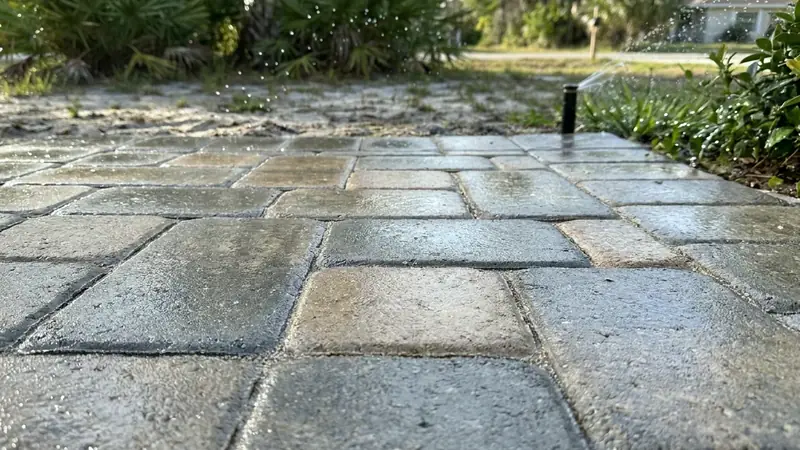
Extension specialists at the University of Florida note that iron is common in Florida well water, and irrigating with it can stain surfaces orange. If your Highlands yard waters from a well, look for rust lines on the pavers nearest the spray heads. Those stains are treated before sealing, because sealer would trap them. Turning a spray head so it misses the pavers stops new rust lines. Ask the contractor to point out which marks are rust and which are only dirt. A quick look at where the spray lands tells you most of what you need to know.
Do Highlands homes near Ray Greene Park need different paver care?
Often yes, because the age of the house points to the age of the pavers and the sealer on them. A guide to one Highlands area counts 71 homes built from 1953 to 1970, and a page on East Highlands lists homes from 1946 to 2022 with a typical build year of 1957. Give your street name when you ask for a free estimate, and the contractor can picture the lot.
Ray Greene Park on Leonid Road opened in 1957 and has ball fields, courts, picnic shelters and parking for 257 cars. Streets such as Monaco Drive, De Paul Drive, Pheasant Drive, Tulsa Road and Loyola Drive North show up in listings for the area. A small patio behind one of these older homes can fall under the minimum job size some companies set, so ask early. Call (904) 299-8891 to find out how yours is treated.
About a third of occupied homes in ZIP 32218 are rented, so some Highlands pavers belong to landlords. If you own a rental, you decide the sealer and the finish, and your tenant should hear the schedule. Share the plan when you ask for a free estimate, and the contractor can set a time that works for both of you. A written plan keeps everyone who parks in the driveway on the same page.
What does paver sealing cost in Highlands?
Published prices for cleaning, sanding and sealing across Northeast Florida run $1.75 to $3.25 per square foot. A small Highlands patio can cost more per foot than a long driveway, because prep time does not shrink with the area. Gates, steps and tight side yards add prep time too. For a figure that fits your pavers, ask for a free estimate.
A failed old coat moves the price up, since stripping comes before sealing. Heavy shade growth and joints that have lost their sand add time as well. Ask the contractor to write the square footage into the quote so you can compare it to the range. Call (904) 299-8891 if you would like to go over a quote you already have.
| Paved area | Typical example | Clean, sand and seal |
|---|---|---|
| 300 sq ft | Small patio or walkway | $525 to $975 |
| 600 sq ft | Two car driveway | $1,050 to $1,950 |
| 1,000 sq ft | Large driveway or pool deck | $1,750 to $3,250 |
| 1,500 sq ft | Driveway plus pool deck | $2,625 to $4,875 |
Math based on the $1.75 to $3.25 per square foot that Northeast Florida paver companies publish. Your contractor sets the actual price after seeing the surface. Repairs, leveling and stripping failed sealer are usually extra.
How does a paver sealing job work in Highlands?
Start with the house and the driveway
The contractor looks at how your driveway meets the garage and the street, and how water runs off it. Any paver that sits low or has lifted gets marked for repair. If the pavers were sealed before, the old product matters, because a water-based coat will not bond over a solvent-based one. Tell the contractor what you know about past owners, even if it is only a guess. A photo from an old listing can help. Highlands lots are often modest, so this walk rarely takes long.
Clean off the green film and grime
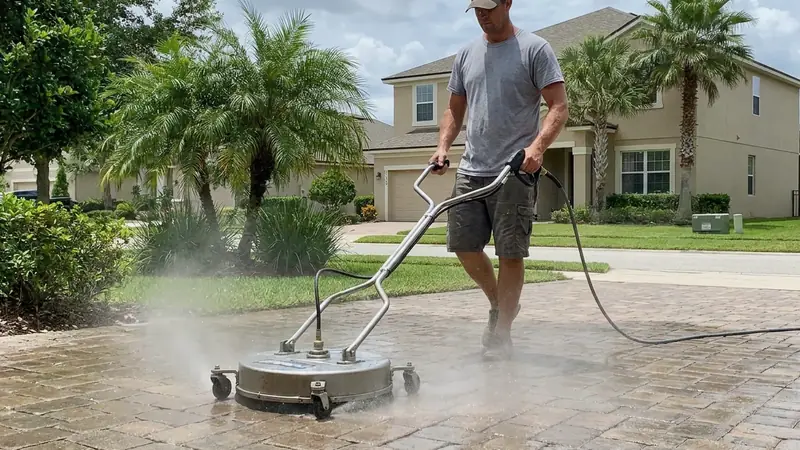
The wash comes next, with extra time on the shaded walkway and any spot under a tree. Rust and oil marks are treated now too. Rinse water stays away from flower beds and the foundation. On a smaller Highlands lot, planning the order of work first keeps dirty water from running back over clean pavers. Pet bowls, toys and planters are moved off the pavers beforehand.
Fill the joints again
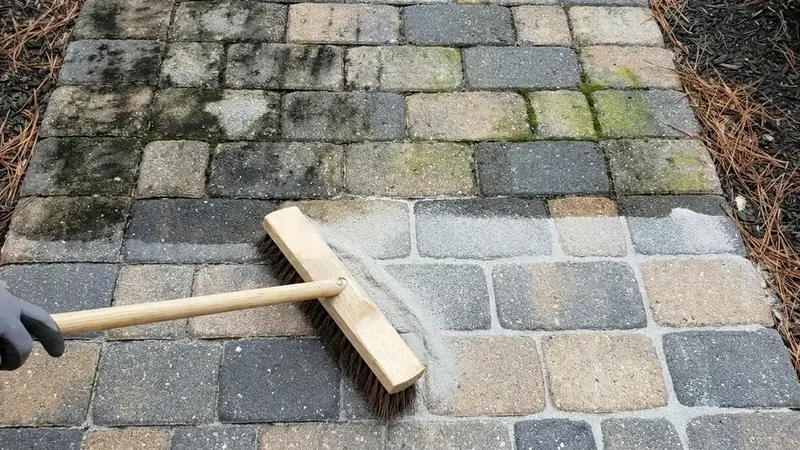
A wash pulls sand out of the joints, so more goes in before sealing. Sandy ground pulls it down, so expect the joints to take more than you might guess. Open joints invite weeds, and a long-neglected drive may need extra passes. The surface is swept and checked once more.
Check that it is dry
Sealer needs a dry surface. Jacksonville's rain is concentrated from May to September, and the driest stretch runs from November to April. A shaded patio can hold moisture longer than a sunny drive, so the contractor tests by hand. Pavers on the Trout River side of the neighborhood may need extra time after a wet week.
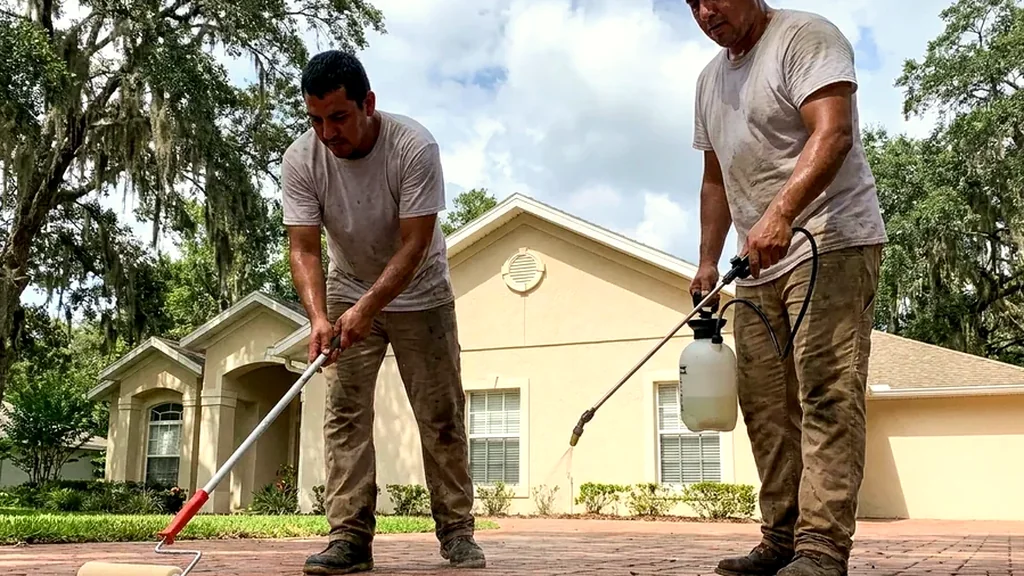
Spray on the coat
Next the contractor sprays the coat and back-rolls it, pushing sealer down into the joints. People can usually walk on it within a few hours, and cars need about a day, one Jacksonville company says. Plan on two to five years before the next coat, going by what companies quote. Ask whether your sprinklers should stay off while the coat cures.
Complete paver services in Highlands
Think of a Highlands job as four short chapters. First the pavers are cleaned, then the joints get new sand. After that comes a wait for the surface to dry, and the coat goes on at the end. To ask how long each chapter takes on your lot, call (904) 299-8891.
Driveways on Highlands streets take the daily tires. Walkways beside the house stay shaded and turn green first. Back patios usually fall somewhere in between. Name the surfaces you have when you ask for a free estimate, and the contractor will plan the order.
Two choices come up on every job: the sealer base, water or solvent, and the look, matte or wet. A past solvent coat rules out a water-based one, so the old coat decides first. On a modest 1950s ranch, matte keeps the pavers quiet beside the house. Call (904) 299-8891 to talk through the choice, or to ask for a small test patch.
Timing follows the rain. Highlands gets most of Jacksonville's roughly 52 inches between May and September, often in short downpours, and sealer needs a dry surface. November through April is the driest stretch, which gives the contractor the easiest window. For dates that suit your street, ask for a free estimate.
Questions to ask before you hire
- Can you lift the stains that fallen leaves and pine needles leave under my trees?
- Will you fill the joints that have washed out near my downspouts?
- Can you clear the white, chalky haze that shows up on some of my pavers?
- Will you call before arriving, and what window should I plan for?
- My pavers were laid recently. How long should I wait before sealing them?
- How often will these pavers need a fresh coat of sealer?
- If part of my patio was sealed years ago, can the new coat match its sheen?
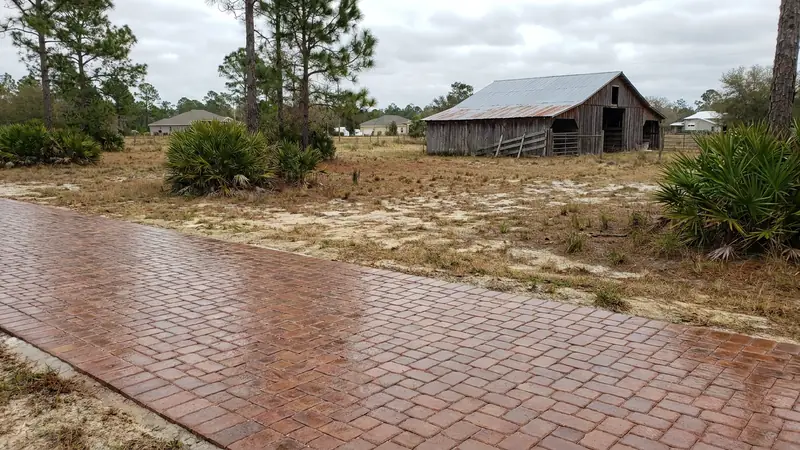
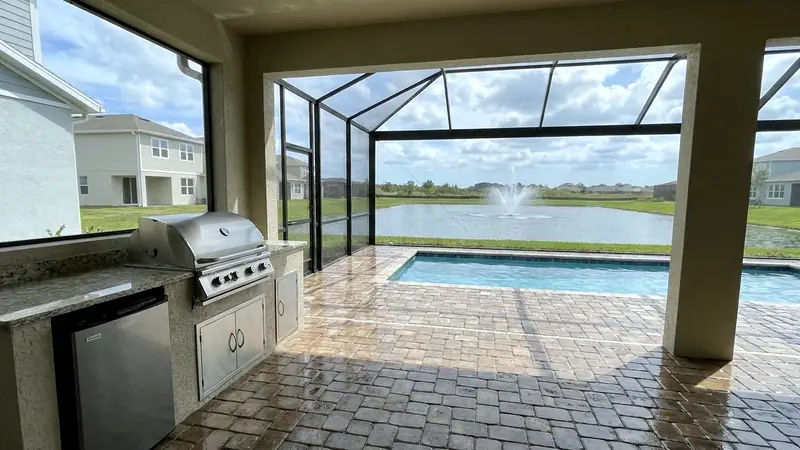
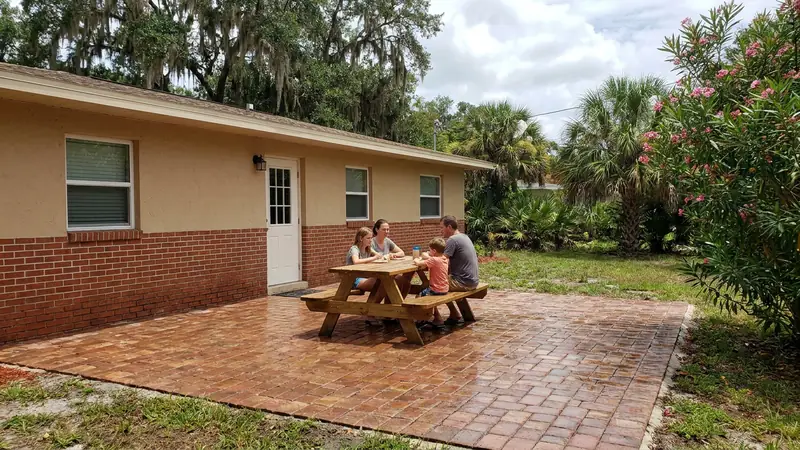
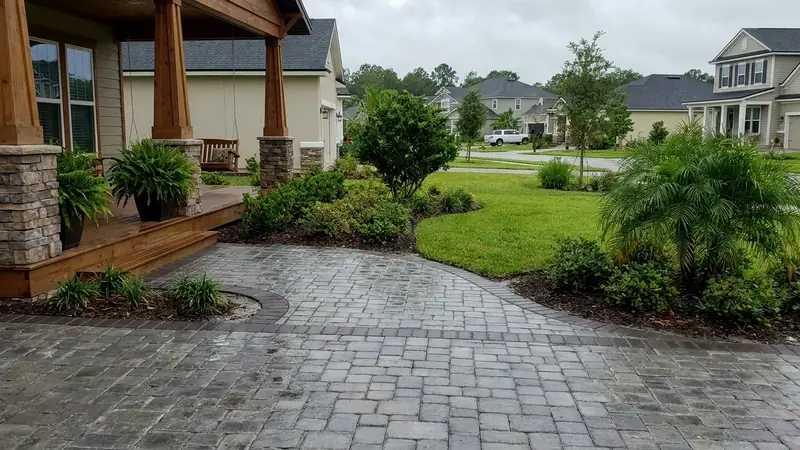
What do sealed pavers look like around Highlands?
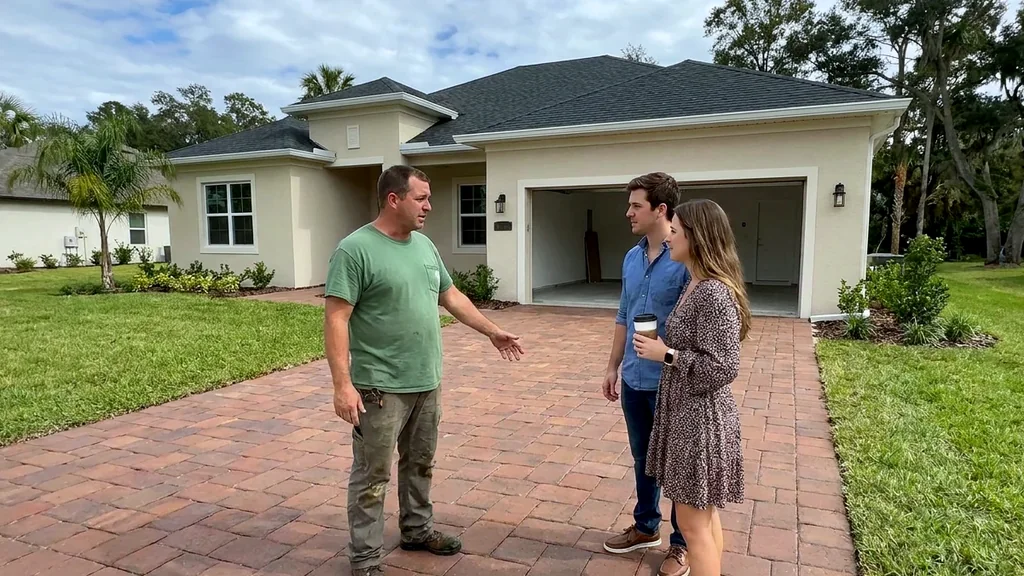
Why local matters in Highlands
A contractor who knows Highlands will ask when your house went up and who has sealed the pavers since. Homes here run from the 1940s to newer infill, so the answers vary from street to street. That history decides how much prep comes before any sealer. To reach a contractor who works this part of the Northside, call (904) 299-8891.
Local work also means knowing the water. The Trout River is brackish at its lower end, the Mandarin soil type nearby holds a seasonal high water table, and summer storms arrive fast. A contractor who works the Northside plans the sealing day around those facts. You can ask for a free estimate and ask how the contractor handles a damp week.
Distance matters on a small job. Highlands is about 7 miles from downtown, so a contractor based in the Jacksonville area can come out for a free look without a long trip. That makes it easier to get a second look at a patio or a front walk. If that is what you need, ask for a free estimate and describe the spot.
Is Highlands part of the Northside, and does that matter for me?
Yes, Highlands is one of the Northside neighborhoods, listed with Brentwood, Dinsmore, Garden City, Oceanway and Panama Park. The Northside joined the city in the 1968 consolidation, and Wikipedia notes there is no single agreed boundary for it. Tell the contractor your street or the nearest cross street so there is no doubt about the address. To confirm yours, ask for a free estimate.
Landmarks give you an easy way to describe where you live. Highlands Regional Library sits on Dunn Avenue, and the North Campus of Florida State College at Jacksonville has been off the same road since 1970. Jacksonville Zoo and Gardens covers about 122 acres at the mouth of the Trout River, and the airport opened in 1968 farther north. Whichever one is closest to you, call (904) 299-8891 and name it.
Frequently Asked Questions
What does paver sealing cost per square foot in Highlands?
Prices published for the region run $1.75 to $3.25 per square foot to clean, sand and seal. Where a Highlands job lands depends on shade growth, old sealer and lost joint sand. A small patio can price higher per foot than a big drive. Ask the quote to show the total area, so you can check the per-foot price.
Is it good to seal pavers in Florida, and in Highlands?
Yes, in most cases, because sealer helps hold joint sand in place and makes the surface easier to keep clean. Heavy summer rain and shade make Highlands pavers a fair candidate. Wet look shows scuffs faster than matte does, which is worth weighing for a drive that sees daily tires. A fresh coat also helps a surface shed water and dirt, which means less scrubbing later.
Do my Highlands pavers need cleaning and new sand before they are sealed?
Yes, both come first. Washing removes the green film and dirt, and it also takes joint sand out, so fresh sand is added before the coat goes on. Sealer needs a dry surface, so the contractor waits until the pavers have dried.
Is it better to spray or roll paver sealer?
Professionals commonly do both. One Jacksonville company says crews spray the sealer and then back-roll it, which gives even coverage and works it into the joints. Ask the contractor how the coat will go on at your Highlands home.
How long does paver sealer last in Highlands?
Two to five years sits between one coat and the next on most quotes, and shade or tires can shorten it. Shade, tire traffic and sun move your driveway toward one end or the other. One Jacksonville company offers a test: water that beads means the coat is working, and water that soaks in and darkens the paver means it is done.
How long do I stay off my pavers after sealing?
Plan on foot traffic within a few hours and keeping cars off for about a day. One Jacksonville company gives those numbers, and the real time depends on the sealer and the weather. Ask the contractor for the timing on your Highlands driveway. The timing on a shaded Highlands drive may run longer.
Will sealing fix pavers that have sunk near the Trout River?
Not by itself, because sunken or lifted pavers get reset before any coat goes on. A Jacksonville company points out that a coat over a dip simply preserves the dip. Point out the low spots at the first visit so they are reset before the coat goes on. A level surface also sheds water better afterward.
Does this cover Highlands in Jacksonville, ZIP 32218?
Yes. This is the Highlands of north Jacksonville, in the Northside near Dunn Avenue and Ray Greene Park, and not another Florida place with a similar name. If you are not sure your street is included, request a quote and give your address. A request with your address settles the question, and the reply arrives within 1 business day.
Nearby areas we serve
Ready for a Free Estimate in Highlands?
Call (904) 299-8891 and tell us about your pavers.
Free, no obligation