
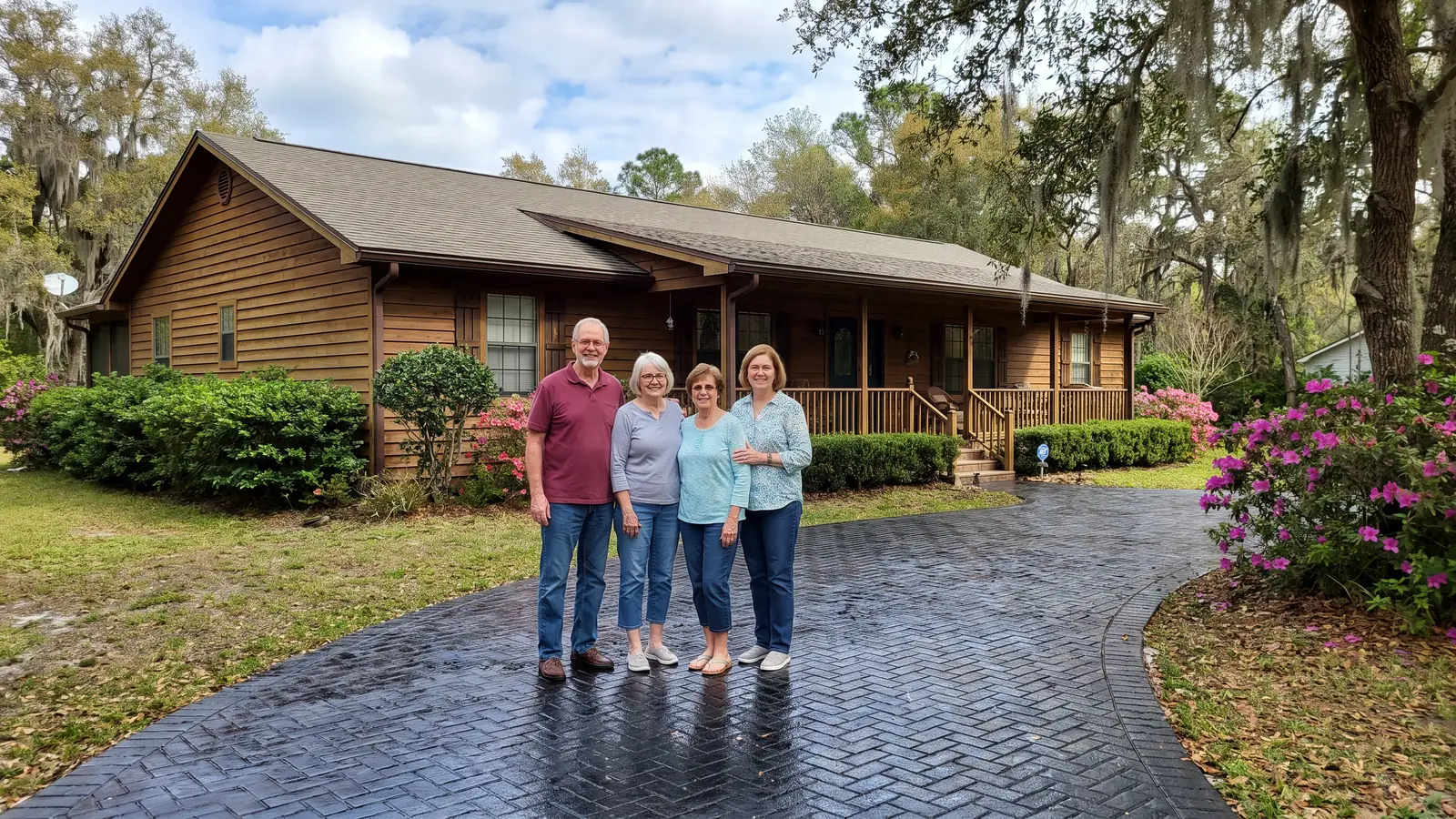
Paver sealing for San Marco homes
Paver Sealing in San Marco, FL
Around Landon Park's roses and magnolias, San Marco pavers need care; call (904) 299-8891 for a free sealing estimate.
- Brings out deeper paver color
- Fresh joint sand helps lock pavers in place
- Gives weeds less room to grow
- Makes the surface easier to keep clean
- Free estimate, no obligation
Request a Free Estimate
Free, no obligation.
Fast, careful paver sealing in San Marco
Paver sealing is available across San Marco, from the walks around the Square to the quiet streets of Colonial Manor and South Riverside. A local contractor cleans, re-sands and seals driveways, front walks, courtyards and pool decks, and the estimate is free. Give your street when you ask for a free estimate, and expect to hear back within 1 business day, usually much sooner.
Picture the stoop of a 1930s house with dark streaks under the magnolia and weeds along the joints. Once the pavers are washed, filled with fresh sand and sealed, that same stoop goes back to one clean color. If you would rather talk first, call (904) 299-8891 and describe the surface you have.
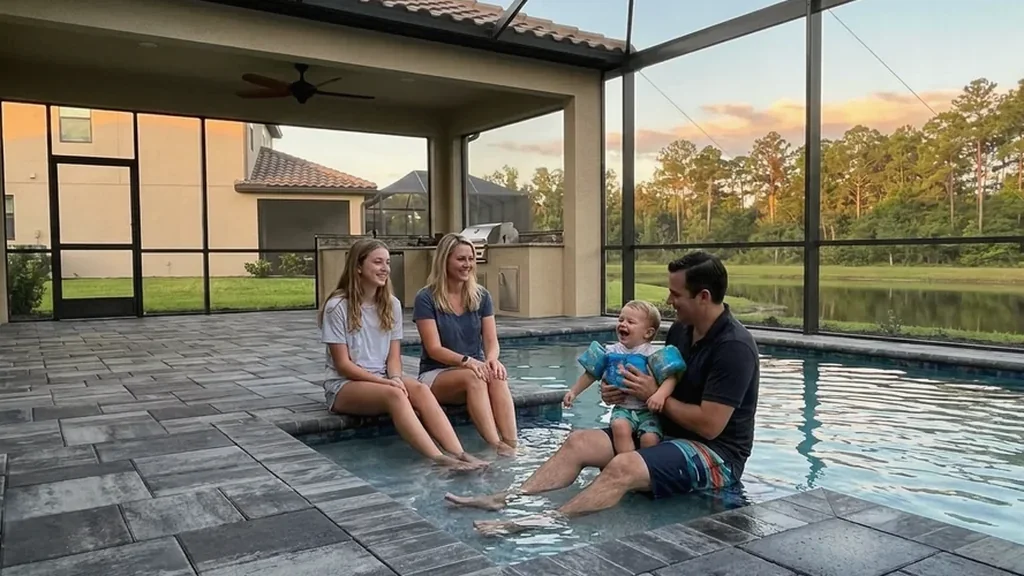
Why hire a local paver sealing contractor in San Marco?
San Marco homeowners hire local paver help because the lots are small and the trees are old, which means each walk and courtyard needs its own plan. To hear what that plan looks like at your address, ask for a free estimate.
A free look at your pavers
The contractor looks over your San Marco walk, drive or courtyard at no charge. You hear a price before you agree to anything.
Tell the contractor what is down
Whatever coat a past owner left decides which product can go on. Share anything you remember at the estimate.
A finish that fits the house
Matte sits quietly beside a Mediterranean Revival front. A wet look adds shine but shows scuffs sooner, and the choice is yours.
Nothing to sign today
The estimate carries no obligation. You pick the date and the finish, and you decide whether to go ahead at all.
Get Your Free Estimate in San Marco
Tell us about your pavers in San Marco.
Free, no obligation
What paver problems show up most in San Marco?
Magnolia and oak litter in the joints
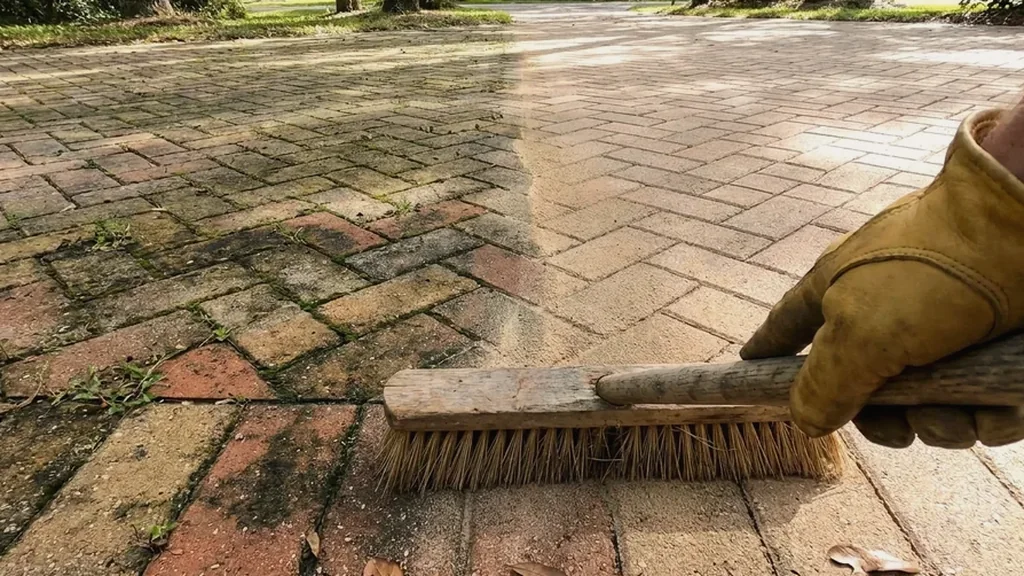
Metro Jacksonville's park guide says several large magnolias and oaks canopy Landon Park, with a rose garden in one corner. Blocks with that kind of canopy shed leaves into paver joints all year. Wet leaves and shade keep joints damp, and damp joints grow a green film. The wash has to come first, since sealer would trap whatever is left on the surface. A walk under those trees may need a second look at the joints once the leaves are gone. Leaves that sit in a joint through a wet week hold water against the paver edge, and that is where the dark staining tends to begin.
Low ground near Craig Creek and the river
River Oaks Park follows Craig Creek, and parts of its grounds sit in a flood plain with natural wetlands. The St. Johns River near Jacksonville also surges with tides. Low lots near the water can stay wet longer than a yard on higher ground, and a driveway at the bottom of a slope can stay damp the longest. Sealer needs a dry surface, so those pavers get more drying time before any coat goes on. Ask the contractor how long your low spot usually stays damp after a storm. You know your own yard better than any map does, so say what you have seen after a hard rain.
Joint sand that heavy rain keeps moving
Duval County sits on fine sand more than 80 inches deep, and Jacksonville gets about 52 inches of rain a year, mostly in short, hard summer storms. Sand in the joints washes out and the gaps widen. Open gaps let soil in and give weeds a start. Pulling weeds will not help for long if the sand underneath is gone, because new seeds land in the same empty gaps. Sand in the joints also keeps the pavers locked against each other, so a topped-up joint helps the whole surface hold its shape.
Brick history and newer pavers on one lot
San Marco began on brickyard clay, and the Gamble and Stockton plant was making 50,000 bricks a day by 1923. Old brick and concrete pavers can end up in the same yard, and they do not always take the same product. Tell the contractor everything on your property. A test spot is a fair thing to ask for before the whole surface is coated. It costs little and shows how the sealer looks on your material. Look at the test spot after it dries, in daylight, before you say yes to the rest.
A coat nobody wrote down
Lots here sold from 1925 into the 1940s, so a single street can hold paving from many owners and many years. The last owner's sealer choice may be a mystery by now. The two main sealer types do not layer, which means whatever sits there now can pick the new product before anyone opens a bucket. If you know who sealed it and when, pass that along. A receipt or a product name on an old bucket in the garage can save a lot of guessing.
Can I get a paver sealing estimate on any San Marco block?
Yes, a contractor can look at pavers on any San Marco block, from the Square to the streets near the river. The Preservation Society draws the neighborhood from Interstate 95 down to Greenridge Road, and from the river east to Philips Highway. Colonial Manor and South Riverside sit inside those lines, and St. Nicholas lies just east. Give your cross streets when you ask for a free estimate.
Fletcher Park, at Atlantic Boulevard and Belote Place, began as housing for World War I shipyard workers. Its 158 houses were finished in April 1919 with concrete sidewalks. Villa Alexandria came later, platted in 1929. Pavers laid by different owners across those decades seldom match, so call (904) 299-8891 and say which part of San Marco you live in.
If your home sits in a local historic district, the City of Jacksonville requires a Certificate of Appropriateness for exterior work and lists driveways as site work. The city page does not say which neighborhoods are covered, so look up your address on the Land Development Map. It also never names sealing, so a short call to city staff settles any doubt. Once you know where you stand, ask for a free estimate.
What does paver sealing cost in San Marco?
San Marco quotes should sit near the $1.75 to $3.25 per square foot that Northeast Florida companies commonly publish for washing, re-sanding and sealing. When the old coat has failed, expect a stripping charge before the new coat goes on. Small courtyards can run into a company's minimum job size, so ask about that. For a price on your walk or courtyard, ask for a free estimate.
Three things move a San Marco quote most: how much shade growth has built up, how much joint sand is gone, and what coat is on the pavers now. A driveway with an open approach is simpler than a back courtyard where gear is carried in by hand. Walks, stoops and a pool deck all count toward the total square feet. Describe your lot when you call (904) 299-8891, and the contractor can say which of these fit.
| Paved area | Typical example | Clean, sand and seal |
|---|---|---|
| 300 sq ft | Small patio or walkway | $525 to $975 |
| 600 sq ft | Two car driveway | $1,050 to $1,950 |
| 1,000 sq ft | Large driveway or pool deck | $1,750 to $3,250 |
| 1,500 sq ft | Driveway plus pool deck | $2,625 to $4,875 |
Math based on the $1.75 to $3.25 per square foot that Northeast Florida paver companies publish. Your contractor sets the actual price after seeing the surface. Repairs, leveling and stripping failed sealer are usually extra.
How does a paver sealing job work in San Marco?
Look over every surface
The contractor walks your San Marco property and checks for settled spots, loose edges and stains. Lifted or sunken sections get fixed first, because whatever shape the pavers hold is the shape that gets sealed. The contractor also looks for an old coat. That check settles the product, since the two sealer types will not stack. Photos of the area help if you want to send them ahead. Include the lowest corner and the most shaded corner, since those tell the most.
Wash off the leaves and green film
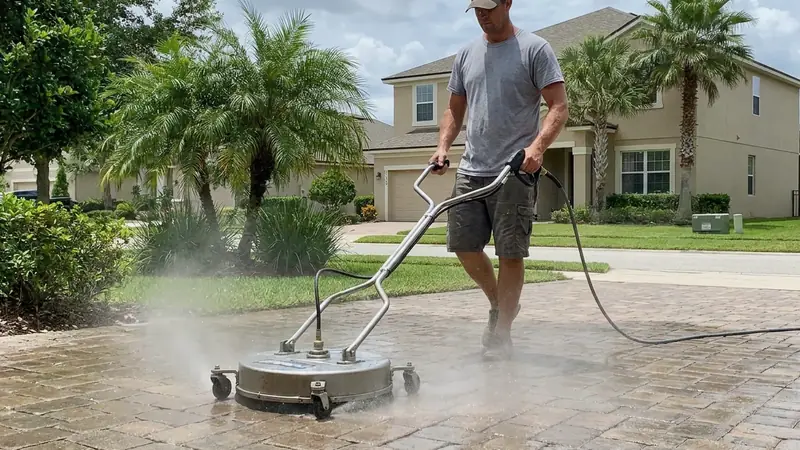
Washing clears leaf litter, green film and dirt from the surface and the joints. Rinse water should stay off old brick walls, wood trim and tender plants where the pavers meet the house. On a shaded courtyard this step can take the longest, because green film clings to damp, shaded surfaces and has to be worked off patiently. Rust and oil stains get treated now, before anything is sealed over them. If a stain does not lift, the contractor should say so before moving on.
Fill the joints with fresh sand
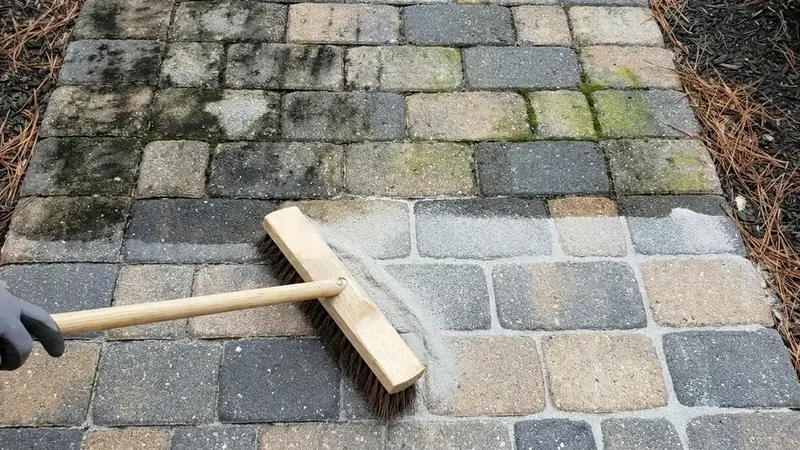
Washing pulls sand out of the joints, so new sand goes back in before sealing. The ground under Duval County is deep sand, and open joints let soil settle in. Weeds then find a place to start, and the pavers lose some of their grip on each other. The surface is swept clean once the joints are full, so loose grains do not stick to the sealer.
Let the surface dry all the way
Sealer needs a dry surface. A Jacksonville company warns that a wet look laid on damp pavers can end up cloudy and white. Shaded San Marco courtyards hold moisture longer than a sunny drive, and summer storms arrive fast. A patient contractor holds the coat until the surface has fully dried. If afternoon rain is in the forecast, the job moves to another day.
Apply the sealer and stay off
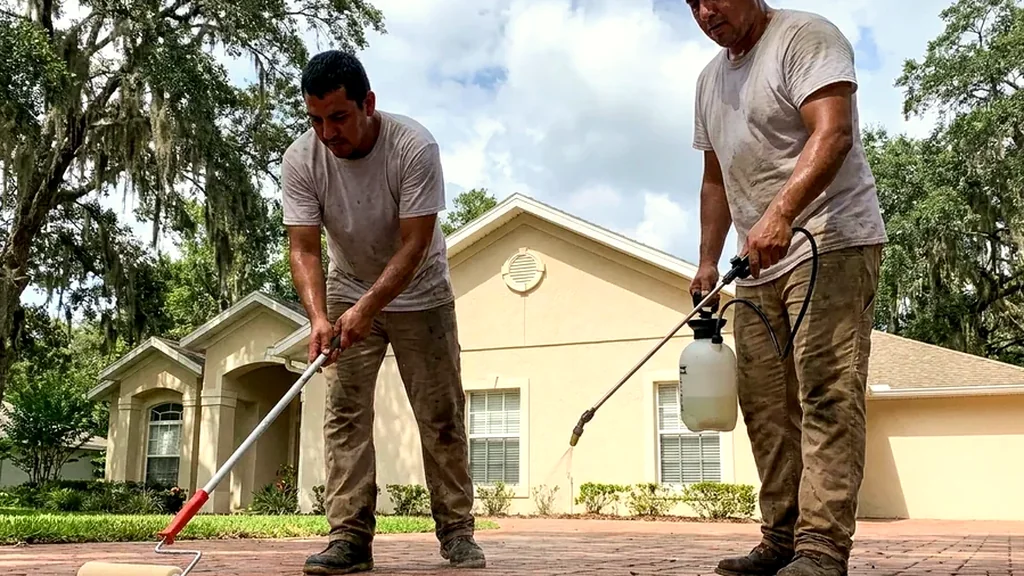
The usual sequence is a spray pass and then a back-rolling pass, which evens out coverage and gets sealer into the joints. Feet are welcome again within a few hours, and tires have to wait longer. Ask the contractor when your driveway is ready for the car, since the answer depends on the sealer and that day's weather. Park on the street until then, and keep the sprinklers off the pavers for the first day.
Complete paver services in San Marco
A San Marco job follows a fixed order. The contractor washes the surface, puts new sand back in the joints, lets everything dry and seals last. That order keeps old leaf stain and dirt from being locked under the coat. To ask how long each stage takes at your address, call (904) 299-8891.
Front walks and stoops matter most here, since San Marco was laid out for walking. Driveways carry tire weight, courtyards stay shaded and pool decks catch splash. Each wears in its own way, so the contractor may suggest a different approach for each one. Name every surface you have when you ask for a free estimate.
Sealer choice starts with what is already on the pavers. An old coat can settle the question for you, since the two sealer families will not layer. After that you pick matte or wet look, and a wet look shows scuffs sooner on a daily driveway. Call (904) 299-8891 to talk through the finish.
Jacksonville gets most of its rain from May to September, in brief, heavy downpours, so a San Marco date can slide. A courtyard under the magnolias dries slowly. The driest months run November to April, which makes dry days easier to find. For a date that fits your block, ask for a free estimate.
Questions to ask before you hire
- Do I need to turn off my sprinklers, and for how long?
- If part of my patio was sealed years ago, can the new coat match its sheen?
- Can you clear the white, chalky haze that shows up on some of my pavers?
- Does the sealer you use make my pavers slippery when they are wet?
- Will you fill the joints that have washed out near my downspouts?
- How long do the pavers need to dry after washing before the sealer goes on?
- Can you lift the stains that fallen leaves and pine needles leave under my trees?
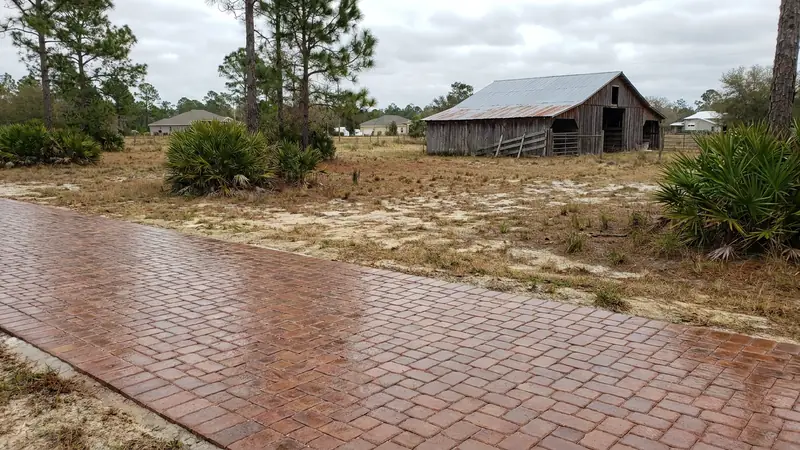
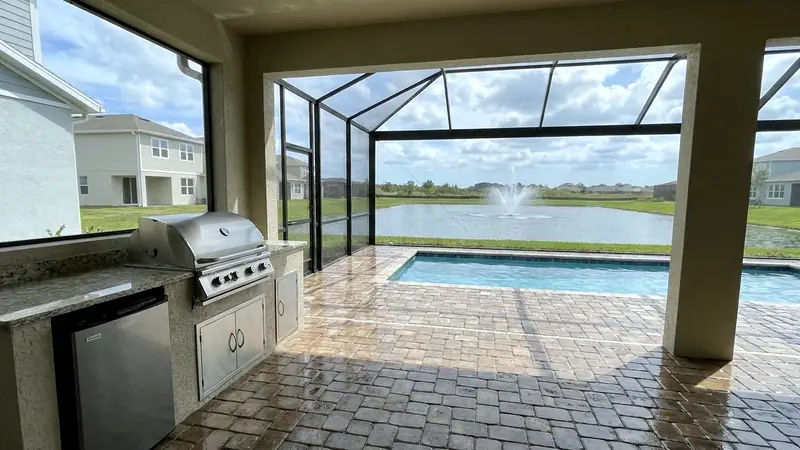
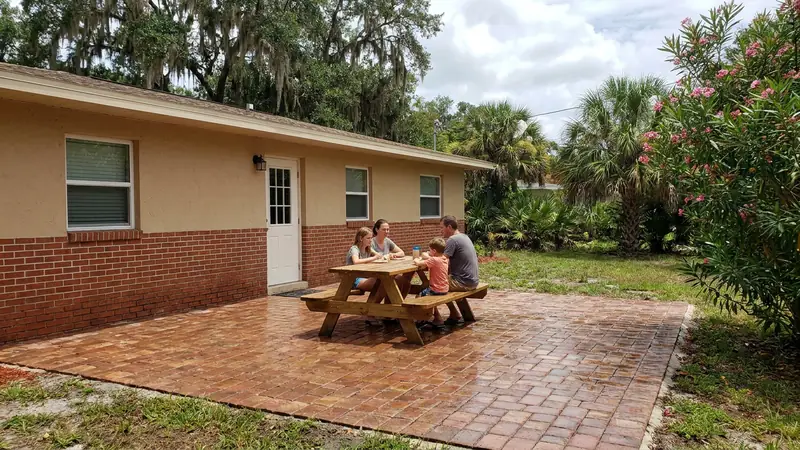
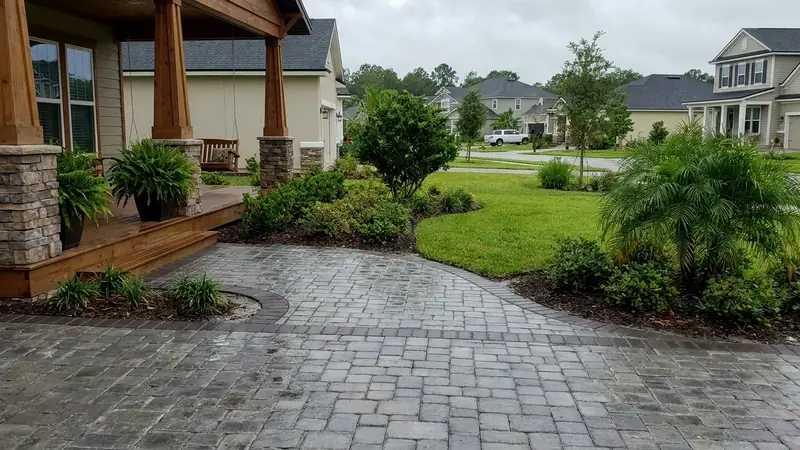
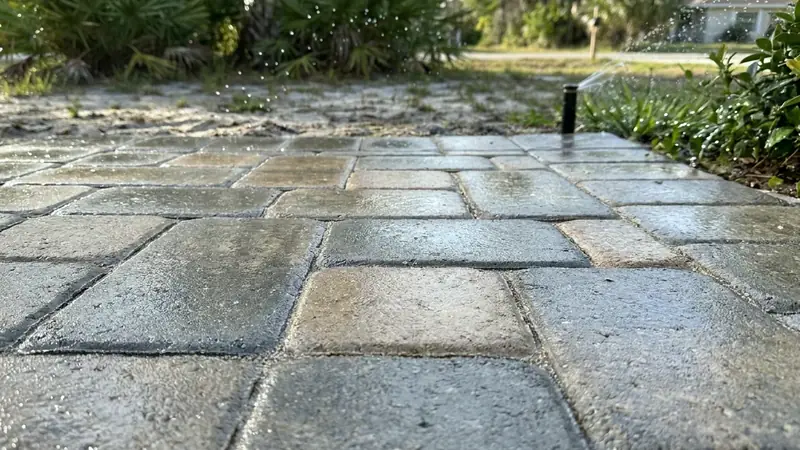
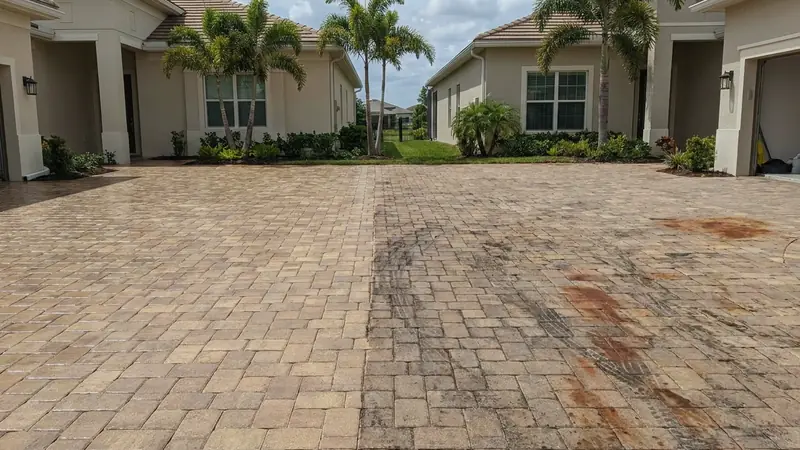
What do sealed pavers look like around San Marco?
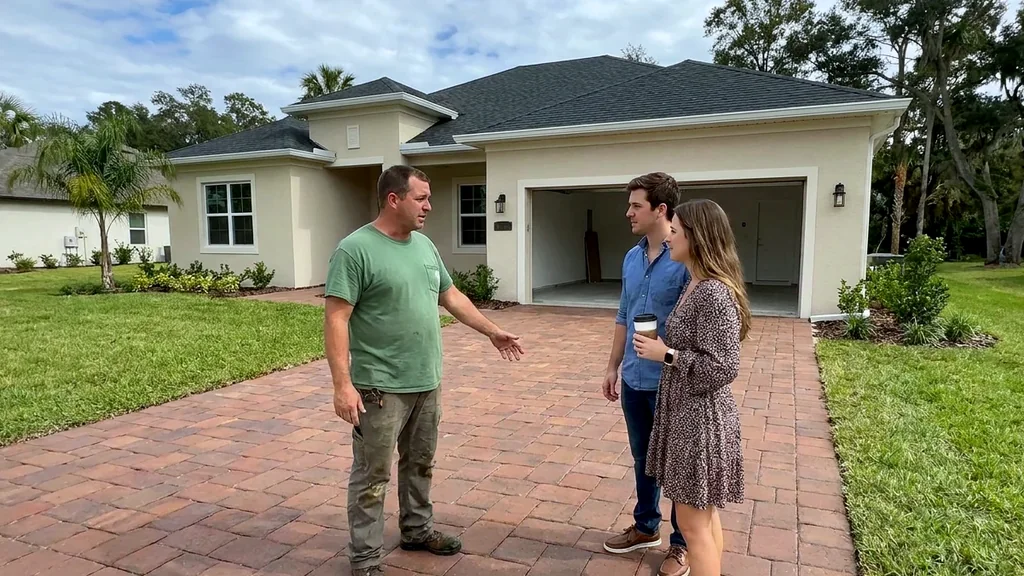
Why local matters in San Marco
Local knowledge starts with the date of your house. San Marco lots were sold from 1925 into the 1940s, so one street can hold pavers from several decades. A contractor who knows that will ask about your old coat before quoting. To start that conversation, ask for a free estimate.
Water comes second. The St. Johns River surges with tides near Jacksonville, and Marco Lake has a canal that runs to it. Low lots close to the water may need extra drying time before sealing. Call (904) 299-8891 to ask how that could affect your date.
Trees come third. Landon Park has magnolias and oaks, Belmonte Park has an oak ring around its lawn, and River Road's median carries live oaks planted in 1985. A contractor who works under that kind of shade expects green film where the sun does not reach. When you are ready, ask for a free estimate.
Why does it matter that San Marco began as a brickyard?
It matters because the whole neighborhood grew out of clay. The Gamble and Stockton Brick Company was making 50,000 bricks a day by 1923 from a pit with red clay over blue clay at least 22 feet deep. When the brickyard moved in 1925, Telfair Stockton kept the pit as Marco Lake, with a concrete seawall and a canal to the river. If your pavers sit near the lake, ask for a free estimate.
From there San Marco grew in layers. Atlantic Boulevard opened in 1910, the Acosta Bridge in 1921, and Jacksonville took in South Jacksonville in 1932. Colonial Manor and South Riverside grew up around the 1857 Red Bank Plantation House, which is Jacksonville's second oldest home still in use. Near the lake, the bridge or the Red Bank house, call (904) 299-8891 and name your street.
Frequently Asked Questions
What is a fair square foot price for sealing in San Marco?
A San Marco job tends to cost $1.75 to $3.25 per square foot for the wash, sand and seal, a range Northeast Florida companies commonly publish. Shade growth, lost joint sand and an old coat move a San Marco job within that range. A failed old coat means a stripping step, and that raises the total.
Is sealing pavers a good idea in San Marco?
Usually yes. Sealing concrete pavers in Florida cuts UV fade, joint washout and mildew, says one Jacksonville company. Shade and heavy summer rain keep many San Marco pavers damp, which is where mildew starts. The trade-off is upkeep, since every coat wears out and needs redoing. Matte or wet look is a matter of taste, and you can ask to see both before deciding.
Can a contractor clean, sand and seal my San Marco pavers in one job?
Yes, a single job can cover all three steps in order. First comes the wash, then new joint sand, then a wait for dry pavers, and sealer goes down last. Ask for the full job in your quote so you can compare it to other prices. A quote that lists only washing, or only sealing, leaves you to add the missing steps later at another price.
What are the downsides of sealing pavers in San Marco?
The main downsides are upkeep and timing. Sealer wears and needs new coats, and a wet look shows scuffs sooner than matte. It also needs a dry surface, which can push back a date on a shaded San Marco courtyard.
How often do San Marco pavers need a new coat?
Quotes from companies in the area put coats at two to five years apart. A driveway with daily tires may sit near the short end, while a shaded front walk can sit at the longer end. One Jacksonville company offers a quick test: water that beads means the sealer works, and water that soaks in and darkens the paver means it is done.
Do I need city approval to seal pavers in San Marco?
Only if your home is in a local historic district or is a designated landmark. In those cases the City of Jacksonville requires a Certificate of Appropriateness for exterior work, and it lists driveways as an example. Check your address on the city's Land Development Map, then ask city staff about sealing. The city page lists the approval for exterior work in general, so a clear answer on sealing is worth getting in writing before the job.
Can old brick and concrete pavers be sealed the same way?
Not always. They are different materials, and an old coat on either one can limit your choices. A water-based product cannot be laid over a solvent-based coat. Tell the contractor what you have and ask for a small test spot first. San Marco began as a brickyard, so brick is part of the neighborhood's story, and it is worth handling with care.
Why do pavers near San Marco's parks turn green so quickly?
Shade and moisture are the usual cause. Moss, lichens and algae should not grow on interlocking concrete pavers unless the area is heavily shaded. Under big magnolias and oaks, leaves and damp joints give green film what it needs. A wash before sealing clears it, and sealer then makes the surface easier to keep clean.
Nearby areas we serve
Ready for a Free Estimate in San Marco?
Call (904) 299-8891 and tell us about your pavers.
Free, no obligation